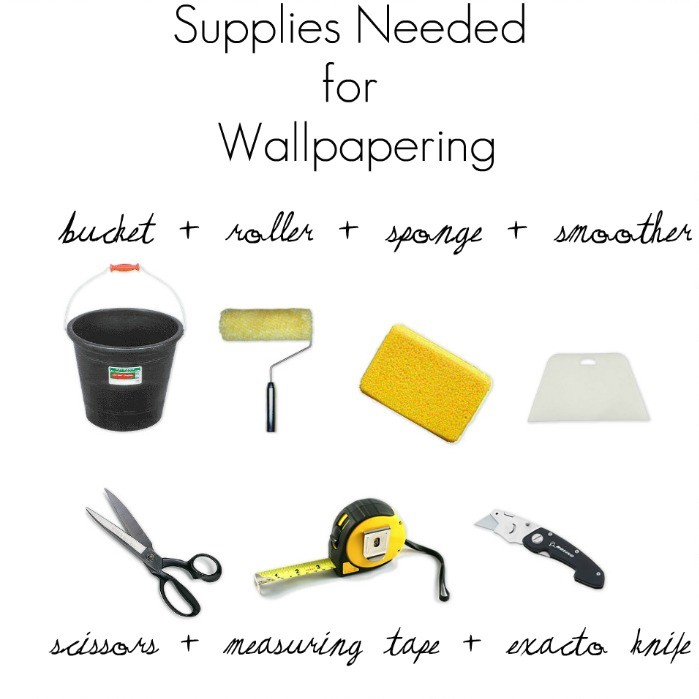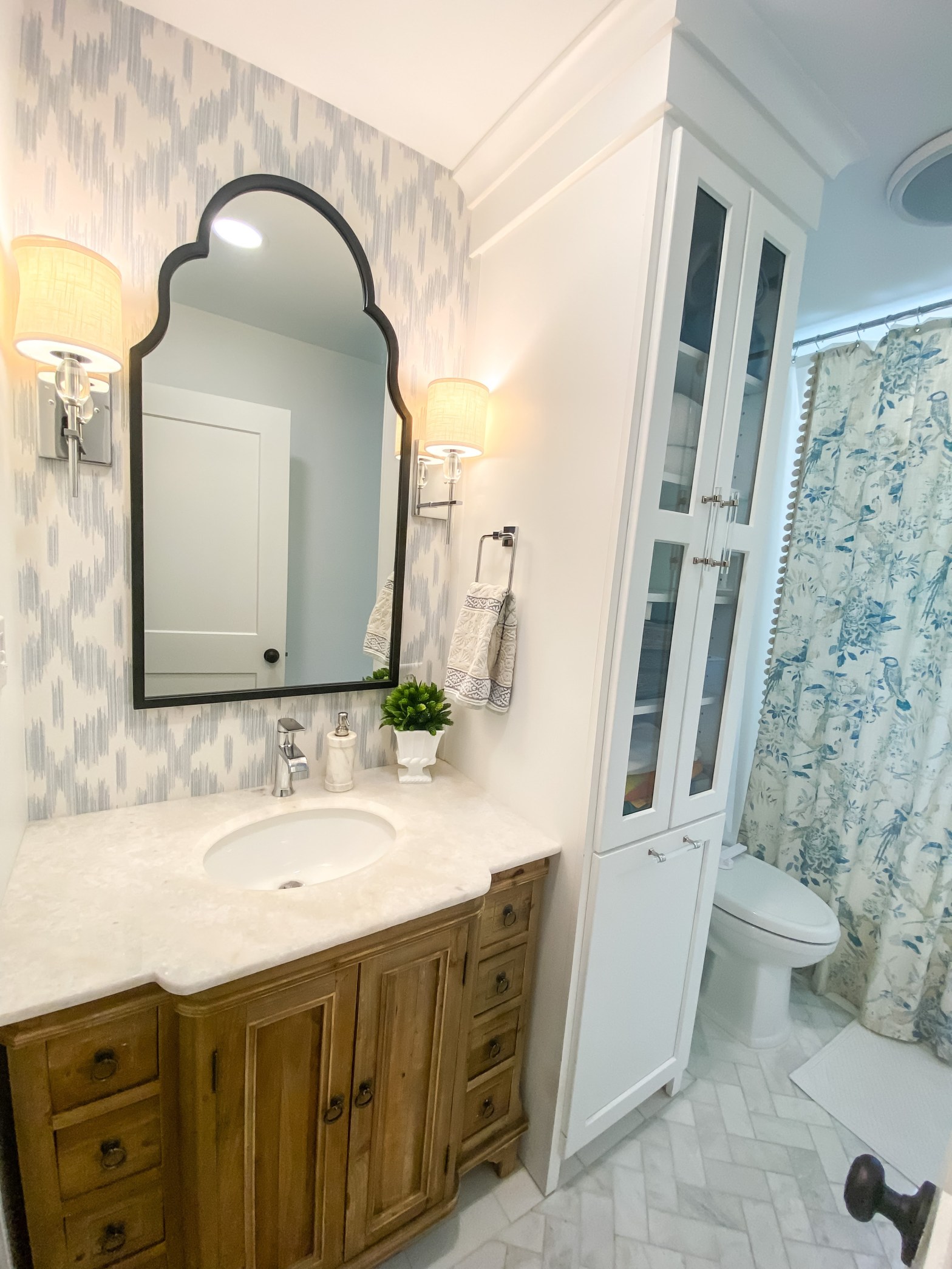
I have been reading through one of my favorite interior design books, “The Decorated Home” by Meg Braff. A lot of Meg’s interiors are adorned with gorgeous wallpaper that will inspire anyone. So, I decided to share with y’all some of my favorite wallpaper in my own home, and give you a little helpful advice when it comes to adding wallpaper to your home.
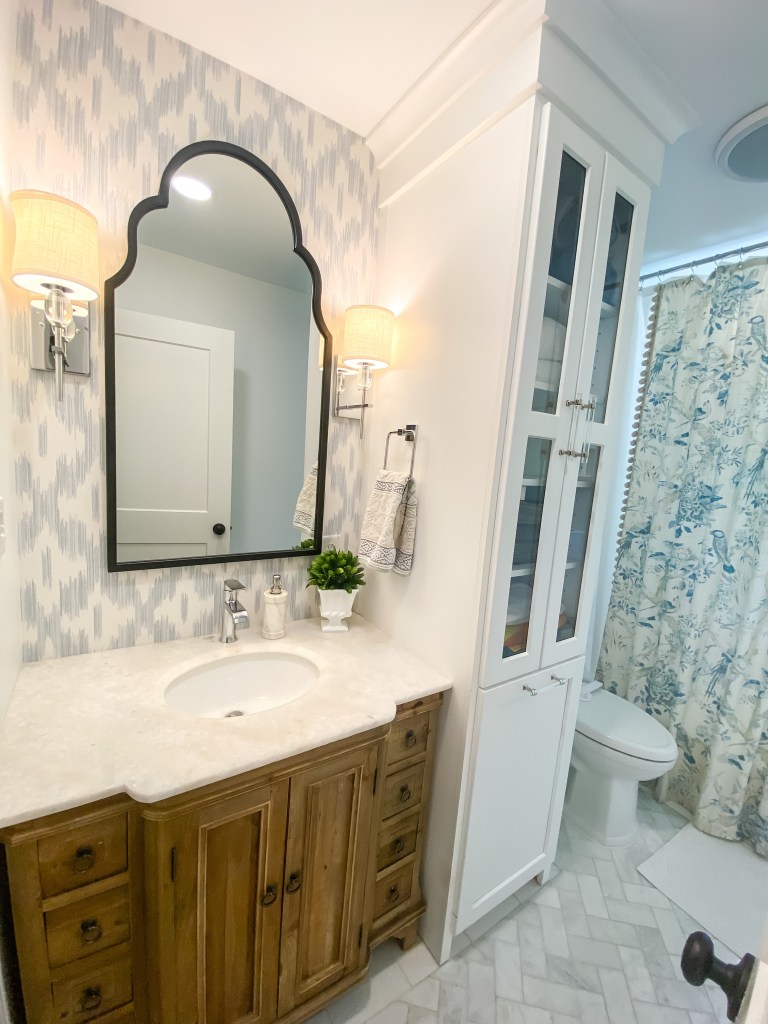
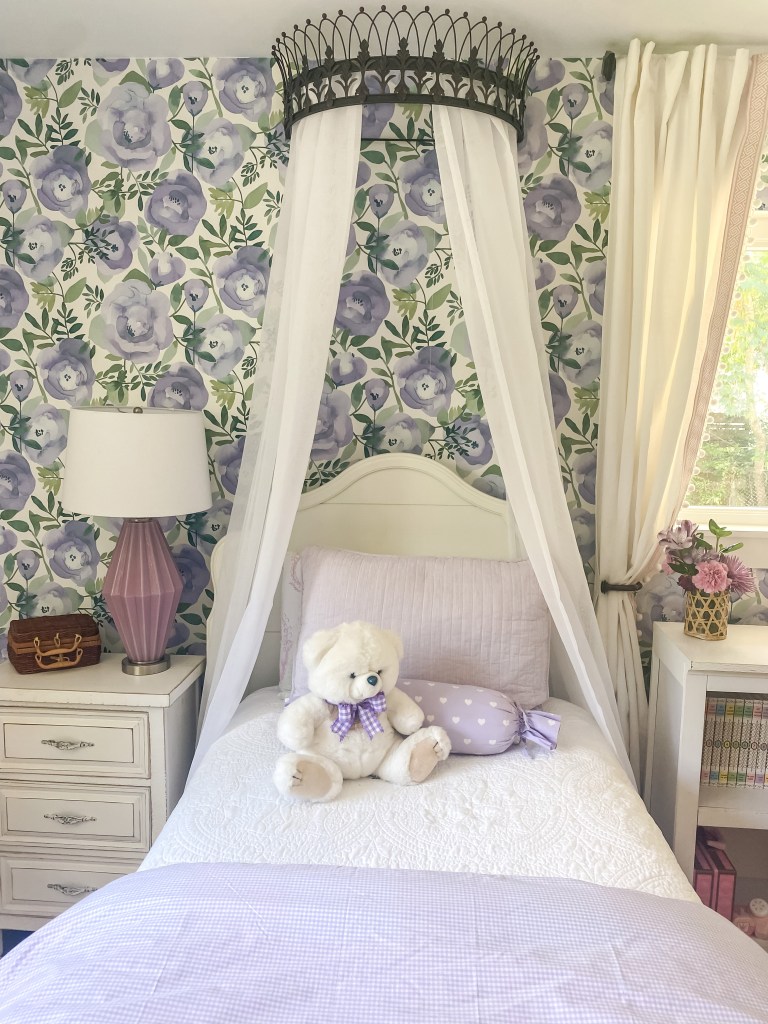
I suggest adding wallpaper to an accent wall instead of an entire room. Some excellent spots in your home are behind a headboard, the back of a bookcase, a small powder room, or in a foyer. Using a wallpaper in a smaller amount will not only save in cost, but most importantly, it will not seem as overwhelming to the design eye.
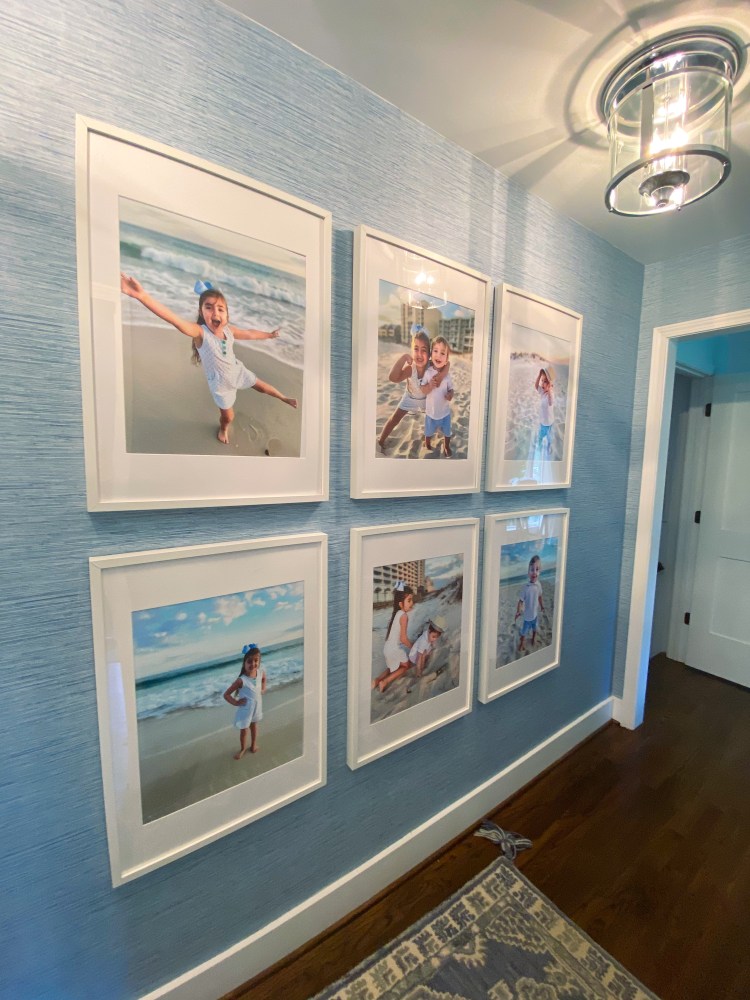
Types of Wallpaper
Pre-pasted has an adhesive already applied for easy hanging
Non-pasted or dry back wallpaper requires the use of a separate paste.
Peel and Stick, strippable, or peelable wallpaper can be removed easily for frequent redecorating.
I find that pre-pasted wallpaper is the easiest to use. Pre-pasted wallpaper allows you to hang the wallpaper on the wall and slide it into place, whereas peel and stick has to be placed in the exact place the first try. If you have a buddy to help, peel and stick becomes alot easier.
Hanging wallpaper
Skill level: Medium, but it depends on the architecture of the room, and the wallpaper design. Wallpaper that already has paste on it makes the job a lot easier also. Trust me!

Steps
1. Measure the drop of the walls and add on an extra 10 cm (4 in) to allow for trimming the paper at the top and bottom once it is hung.
2. Unroll the paper, pattern side down, on your work surface. Measure and mark the drop length on the back of the paper, then cut with a sharp pair of scissors.
3. It is important that the wallpaper is level vertically. In older homes the windows or doors may not be level. It is best to use a level that projects a laser line on the wall.
4. With the wallpaper still facing down, apply the paste in the middle of the paper and work the paste towards the edge. Make sure to cover the entire paper. Loosely fold the ends of the paper in towards the middle and allow it to soak for the recommended time. This could be up to 10 minutes depending on the thickness of the paper.
5. If your room has a focal point such as a fireplace or bed start there. Hang the first piece so that your pattern falls in the center of the wall, and work outwards. If there is no focal point, start papering to the right of the largest window. Work around the room until you reach the door, then go back to the first drop and work in the other direction.
6. When hanging the wallpaper, leave a 5cm (2in) overhang so you can trim the paper.
7. Smooth the paper downwards, and then outwards with a paper hanging brush. Open the bottom fold of the paper, and smooth the lower half of the length carefully into place.
8. Where the wallpaper joins the ceiling, and the baseboard at the bottom, run the back of the scissors against the wallpaper. Peel back the wallpaper and cut along the crease. Smooth back the paper in place and sponge off the excess paste immediately.
9. Hang the next piece by sliding it into place allowing for no gaps or overhang. Brush the joint to smooth the edges. You can also use a seam roller to press the edges (except of embossed paper).
Wallpaper Quantities
WALLPAPER QUANTITIES: Wallpaper is sold in rolls, which usually measure 10 meters (33 feet) long and 52 cm (21 in) wide. To work out how many rolls to buy, you will need to know how many “drops” (wall height length) you will get from each roll.
The Confusing Way to Figure Out Quanty of Wallpaper Needed
Step 1 Formula: Height of wall + 10 cm + length of pattern repeat=the length of the drop.
Step 2 Formula: Length of the roll (usually 33 ft) divided by the length of the drop= how many drops per roll.
Step 3 Formula: Total width of walls divided by the width of roll= Number of drops needed.
Step 4 Formula: Number of drops needed to wallpaper room divided by the number of drops per roll + 1= number of rolls of wallpaper you need to buy.
*Keep in mind that most wallpaper is sold in double rolls.
Helpful Tip: Always buy wallpaper in the same batch to ensure color consistency. You can check the batch number that is printed on the roll.
Helpful Chart For Number of Rolls
| Size of Room | Ceiling Height | |||
| 8 feet | 9 feet | 10 feet | 11 feet | |
| 8 x10 | 10 | 12 | 12 | 14 |
| 10 x 10 | 12 | 12 | 14 | 16 |
| 10 x 12 | 12 | 14 | 16 | 16 |
| 10 x 14 | 14 | 14 | 16 | 16 |
| 12 x 12 | 14 | 14 | 16 | 18 |
| 12 x 14 | 14 | 16 | 18 | 20 |
| 12 x 16 | 16 | 18 | 20 | 20 |
| 12 x 18 | 16 | 18 | 20 | 22 |
| 12 x 20 | 18 | 20 | 22 | 24 |
| 14 x 14 | 16 | 18 | 20 | 22 |
| 14 x 16 | 16 | 18 | 20 | 22 |
| 14 x 18 | 18 | 20 | 22 | 24 |
| 14 x 20 | 18 | 20 | 22 | 24 |
| 14 x 22 | 20 | 22 | 26 | 28 |
| 16 x 16 | 18 | 20 | 22 | 24 |
| 16 x 18 | 18 | 20 | 22 | 24 |
| 16 x 20 | 20 | 22 | 24 | 26 |
| 16 x 22 | 20 | 24 | 26 | 28 |
| 16 x 24 | 22 | 24 | 28 | 30 |
| 18 x 18 | 20 | 22 | 24 | 28 |
| 18 x 20 | 20 | 24 | 26 | 28 |
| 18 x 22 | 22 | 24 | 28 | 30 |
| 18 x 24 | 22 | 26 | 28 | 32 |
Source of chart: Dewalt, Suzanne. How to Start a Home-Based Interior Design Business.Second Edition. Guilford, Connecticut: The Globe Pequot Press. 2000.
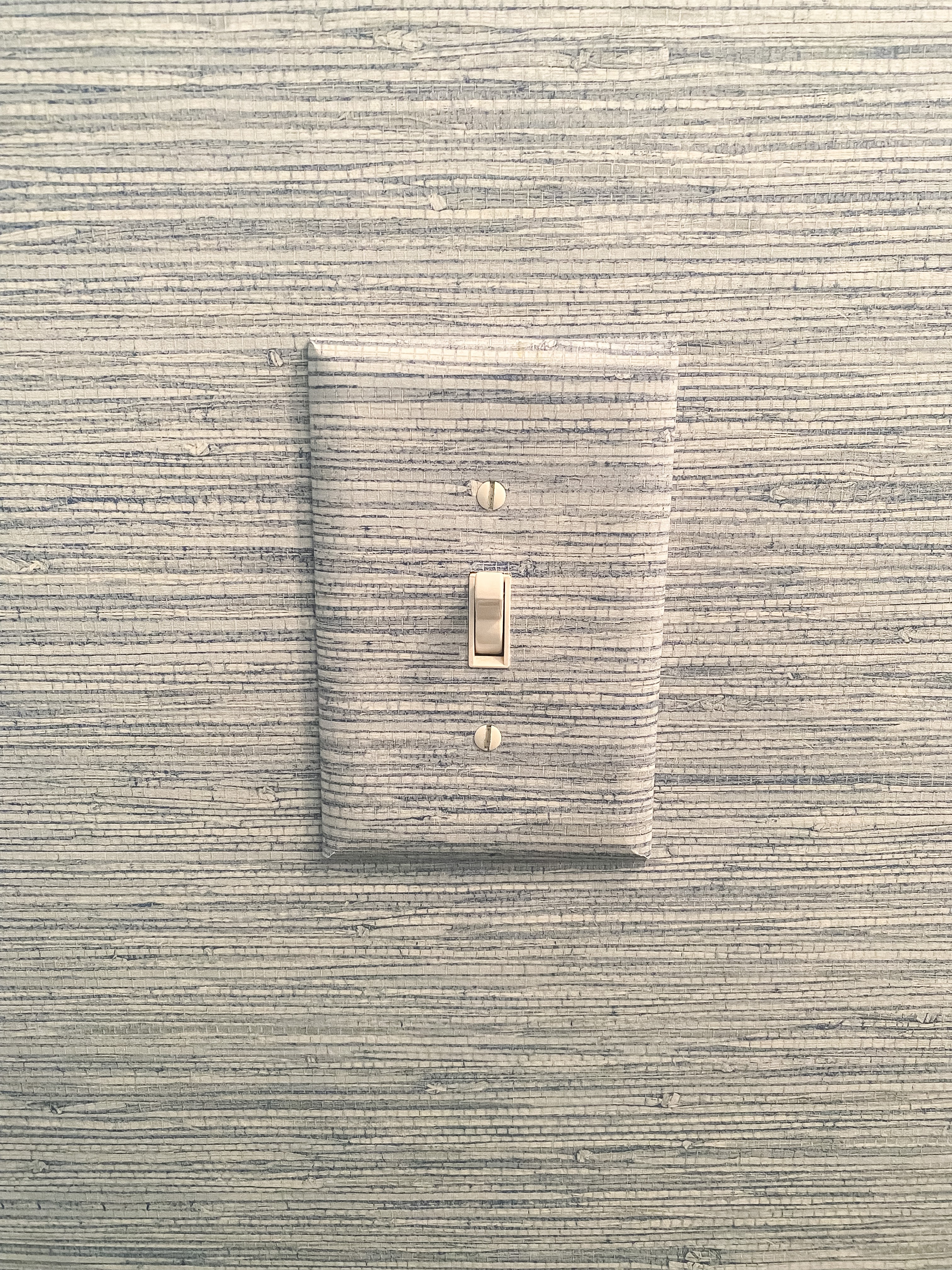
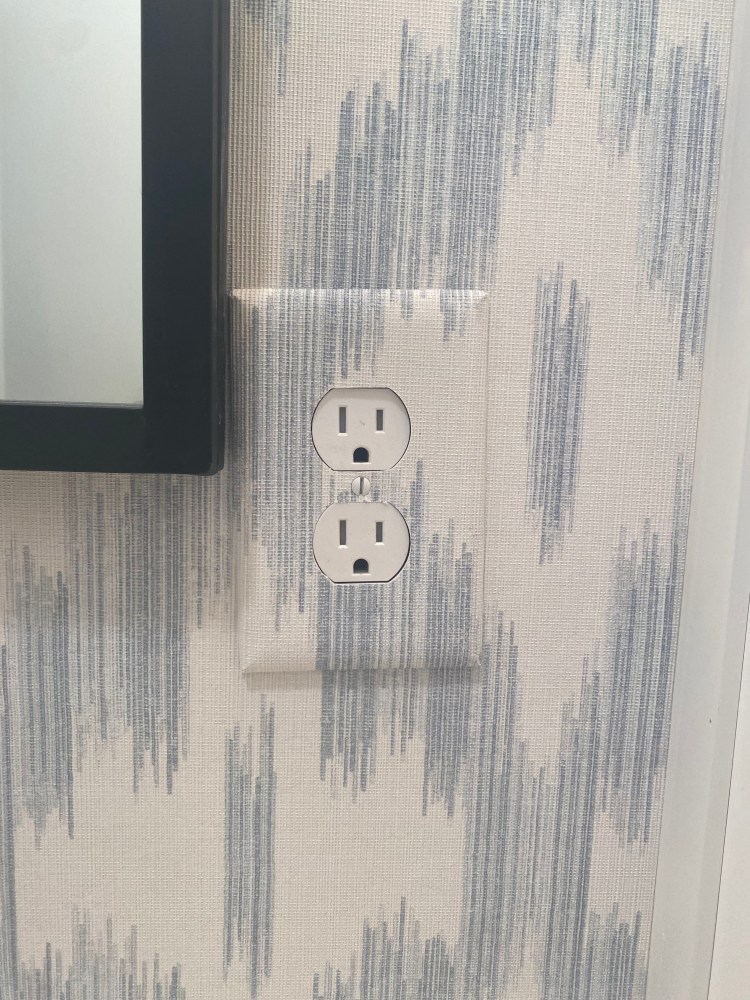
Pro Tip: Cover your outlets and light switches with wallpaper also. Notice how the wallpaper design matches outlet cover so it blends into to become more hidden.
 Rban Interiors